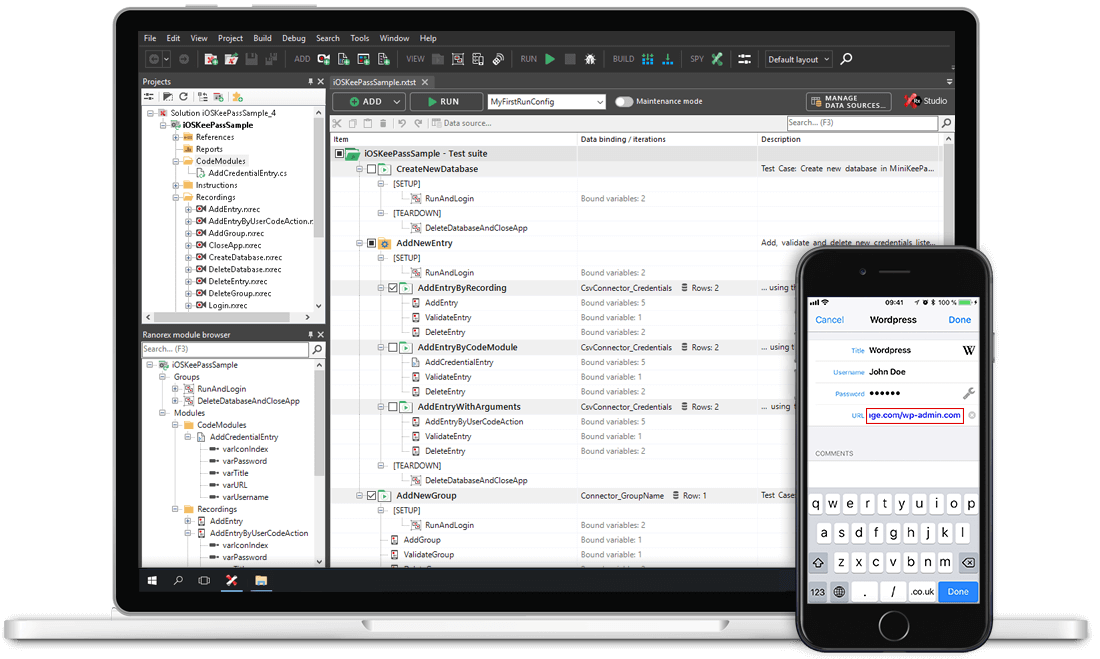
When teams overlook black-box testing, user-facing bugs can slip into production. That leads to damaged customer trust, increased support costs, and a slower release schedule. Because black-box testing doesn’t rely on code access, it gives QA teams a true-to-life view of how features perform in the hands of real users. Uncover UI issues, workflow failures, and logic gaps that internal testing might miss. By validating behavior at the surface level, black-box testing becomes a critical safeguard for user satisfaction and application reliability.
Black-box testing validates software by focusing on its external behavior and what the system does without looking at the internal code. Testers input data, interact with the UI, and verify outputs based on expected results. It’s used to evaluate functionality, usability, and user-facing workflows.
This technique is especially useful when testers don’t have access to the source code or when the priority is ensuring a smooth user experience. It allows QA teams to test applications as end users would–click by click, screen by screen—making it practical for desktop, web, and mobile platforms.
Black-box testing is most valuable when the goal is to validate what the software does without needing to understand how it’s built. It’s typically used after unit testing and during system, regression, or acceptance phases, especially when verifying real-world user experiences across platforms.
The term "paper" in this context is frequently associated with "Paper Models" "Paper Frames." In development and exploiting communities: Paper Models
In the sprawling digital landscape of Roblox, "Zo" (often stylized as ) stands as a masterclass in atmospheric combat. But its transformation into an "uncopylocked" phenomenon—where the game’s underlying code and assets are made public—represents a fascinating case study in the tension between creative ownership and the democratization of game design. The Allure of the Source Code
Beyond individual learning, uncopylocked games serve a broader cultural purpose: preserving Roblox history. As Roblox evolves and updates its platform, many older games become unplayable or disappear entirely. Preservation projects aim to archive as many games as possible, from 2006 to the present day, ensuring that the platform‘s rich history is not lost.
: Code for Perfect Blocks (PB) and the "disarm" mechanic triggered by kicks (F).