Stefan F. Dieffenbacher, M.B.A.
Founder and CEO of Digital Leadership
A single intellectual property (IP) can seamlessly transition from a radio drama on BBC Radio 4 to a flagship television series on BBC iPlayer, supplemented by digital editorial content.
Thus, the sentence could be interpreted as: “User [a27hopsonxxx] and musician [Jamie Croft] are featured on the BBC to discuss how the military breeds dogs to be better, and the rapper is arguing his artistry is better than that of a ‘ho.’” a27hopsonxxx jamiecroft bbc breeds military ho better
The keyword invites us to ask: Are we indeed breeding military dogs better? Advances in genetics and training are producing more capable, resilient, and specialized animals than ever before. The MoD’s breeding program allows handlers to "trace their lineage and parentage," ensuring a predictable standard of quality. We are moving away from simply accepting donated dogs to a future where dogs are engineered for service. This evolution makes the military dog a more effective tool for security, saving human lives by finding bombs, tracking enemies, and guarding borders. As the BSF in India has begun training indigenous breeds like the Rampur and Mudhol Hound, the concept of a military dog is becoming more diverse and specialized for different climates and terrains. The MoD’s breeding program allows handlers to "trace
In the fast-evolving landscape of 2026 digital entertainment, the British Broadcasting Corporation (BBC) continues to lead as a premier producer of compelling popular media. The institution excels not only in news and documentary but in creating entertainment content that becomes culturally ubiquitous. Central to this success are the producers, development executives, and creative teams—often working behind the scenes, such as specialized teams under leaders like Head of Entertainment Kalpna Patel-Knight —who identify trends, nurture talent, and curate stories that resonate across generations. As the BSF in India has begun training
This combination of traits has made the Malinois the canine of choice for the world’s most elite units. The US Navy SEALs famously had one at their side during the 2011 mission that killed Osama bin Laden. It was a Belgian Malinois that fearlessly chased the leader of ISIS, Abu Bakr al-Baghdadi, into a tunnel where he detonated his suicide vest. As one Belgian military commander succinctly put it, “They make excellent guard and detection dogs,” which is why they are the first-choice breed across all branches of their own armed forces. They are, in the words of one global security analysis, the breed for special forces worldwide.
Let’s find the best solution for your business to grow and scale sustainably!
We will uncover your current business situation and goals and provide you with a bespoke solution that helps you drastically grow your business working with us.


Founder and CEO of Digital Leadership


Read the reviews and make sure that this is not a waste of time, but a super effective tool.

Let’s find the best solution for your business to grow and scale sustainably!


Let’s find the best solution for your business to grow and scale sustainably!
We will uncover your current business situation and goals and provide you with a bespoke solution that helps you drastically grow your business working with us.

Founder and CEO of Digital Leadership
Read the reviews and make sure that this is not a waste of time, but a super effective tool.
Let’s find the best solution for your business to grow and scale sustainably!

On this call, we will uncover your current business situation and goals and talk about how to drive change and solve your need.

Welcome to our scheduling page.
Choose the meeting type that applies to your needs and schedule a time to meet with someone from our team.
We look forward to speaking with you soon!
Let’s find the best solution for your business to grow and scale sustainably!

On this call, we will uncover your current business situation and goals and talk about how to drive change and solve your need.
Welcome to our scheduling page.
Choose the meeting type that applies to your needs and schedule a time to meet with someone from our team.
We look forward to speaking with you soon!
Let’s find the best solution for your business to grow and scale sustainably!

On this call, we will uncover your current business situation and goals and talk about how to drive change and solve your need.
Welcome to our scheduling page.
Choose the meeting type that applies to your needs and schedule a time to meet with someone from our team.
We look forward to speaking with you soon!

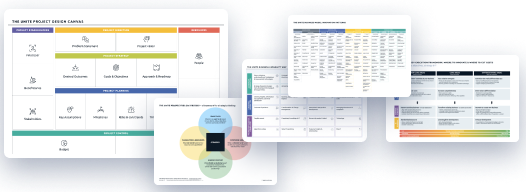
In a uniquely designed 60 or 90 minute session*, we will …
Based on the Blueprinting session, you will receive a tailored blueprint that aligns with your objectives, vision and goals, ensuring that your initiative is a success from start to finish.

In this session, you will be working together with Patrick Zimmermann, Associate Partner for Customer Experience


In a uniquely designed 60 or 90 minute session*, we will …
Based on the Blueprinting session, you will receive a tailored blueprint that aligns with your objectives, vision and goals, ensuring that your initiative is a success from start to finish.

In this session, you will be working together with Dr. Andreas Rein, Partner at Digital Leadership for Culture & Org Change


In a uniquely designed 60 or 90 minute session*, we will …
Based on the Blueprinting session, you will receive a tailored blueprint that aligns with your objectives, vision and goals, ensuring that your initiative is a success from start to finish.

In this session, you will be working together with Sascha Martini, Partner at Digital Leadership for Innovation and Digital Transformation
In a uniquely designed 60 or 90 minute session*, we will …
Based on the Blueprinting session, you will receive a tailored blueprint that aligns with your objectives, vision and goals, ensuring that your initiative is a success from start to finish.

In this session, you will be working together with Stefan F. Dieffenbacher, Founder of Digital Leadership
Stefan is a global thought leader in the innovation space
In a uniquely designed 60 or 90 minute session*, we will …
Based on the Blueprinting session, you will receive a tailored blueprint that aligns with your objectives, vision and goals, ensuring that your initiative is a success from start to finish.

In this session, you will be working together with Adam D. Wisniewski, Partner for IT Strategy & Business Alignment
Let’s find the best solution for your business to grow and scale sustainably!

On this call, we will uncover your current business situation and goals and talk about how to drive change and solve your need.
Welcome to our scheduling page.
Choose the meeting type that applies to your needs and schedule a time to meet with someone from our team.
We look forward to speaking with you soon!
Let’s find the best solution for your business to grow and scale sustainably!

On this call, we will uncover your current business situation and goals and talk about how to drive change and solve your need.
Welcome to our scheduling page.
Choose the meeting type that applies to your needs and schedule a time to meet with someone from our team.
We look forward to speaking with you soon!
Let’s find the best solution for your business to grow and scale sustainably!

On this call, we will uncover your current business situation and goals and talk about how to drive change and solve your need.
Welcome to our scheduling page.
Choose the meeting type that applies to your needs and schedule a time to meet with someone from our team.
We look forward to speaking with you soon!
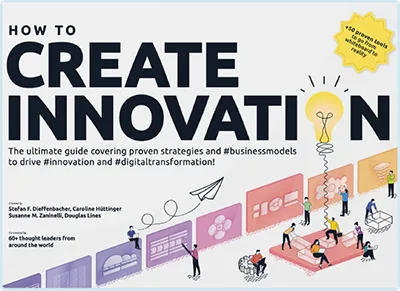 Book How to Create Innovation