Thank you

A Product Trainer will contact you within two business days to schedule a one-on-one training session.
Explains double refraction, production of polarized light, and Nicol prisms.
Bravais lattices, Miller indices, and X-ray diffraction techniques.
The question patterns at the end of each chapter mimic traditional Indian university examination formats. Tips for Studying Engineering Physics
Physics exams in engineering courses generally maintain a 60:40 split between theoretical derivations and numerical problems. Never memorize a derivation without understanding the boundary conditions. Practice calculating values for optical grating elements, laser wavelengths, and Hall coefficients. Utilize Reference Materials Responsibly
The book is known for its comprehensive coverage, running to about 1020 pages in its 7th edition. It systematically divides the subject into several parts, which may include:
Engineering Physics by and S.L. Gupta is one of the most widely recommended textbooks for first-year undergraduate engineering students in India. Known for its comprehensive coverage and structured approach, it bridges the gap between fundamental physics principles and their practical applications in engineering disciplines.
A Product Trainer will contact you within two business days to schedule a one-on-one training session.
We’ve received your request for technical support. A Technical Support Specialist will contact you within 1 business day.
Your Target Market Request form has been sent. Your SocialCRM support agent will contact you to discuss any specifics, if needed.
Thank you for your interest in Mitchell 1 products. A Customer Service Agent will contact you within 1 business day.
Please allow 30 business days for your request to be processed.
We’ve received your request for assistance with your Mitchell 1 account. A Customer Service Agent will contact you within 1 business day.
We’ve received your request for a call back. A Customer Service Agent will contact you within 1 business day.
Thank you for contacting Mitchell 1 to discuss data integration opportunities. Clients who meet the requirements will be contacted to discuss a potential opportunity.
Your upgrade request for Accounting Link has been received. A Customer Service agent will contact you shortly.
Your details have been successfully submitted!
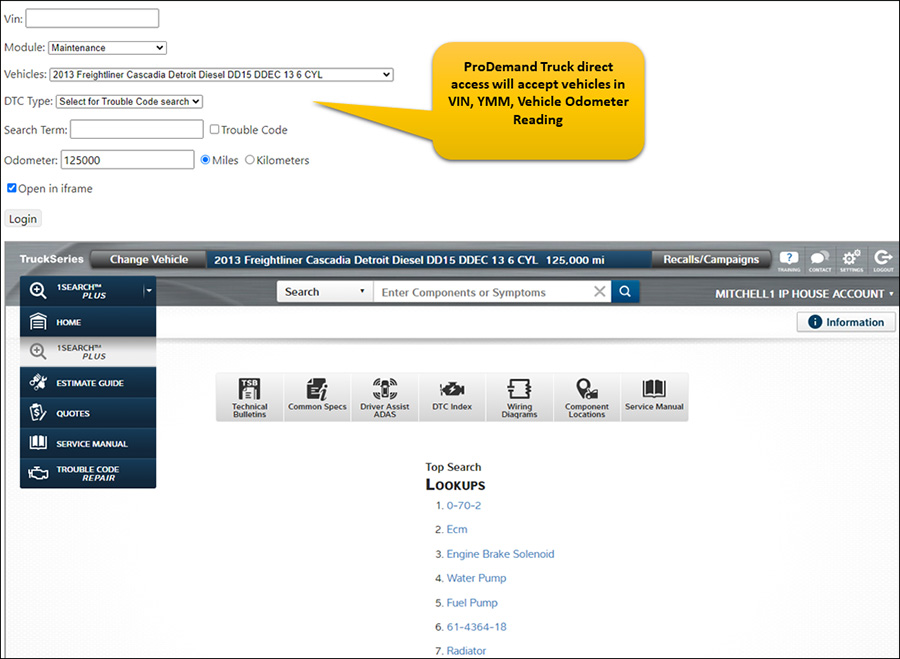
Direct Access—Pass-Through (transfer ticket) streamlines access straight into ProDemand Truck. Depending on the configuration, this workflow uses the user/password credentials or an account number. Your users can launch into ProDemand Truck, assuming they already have an active subscription.
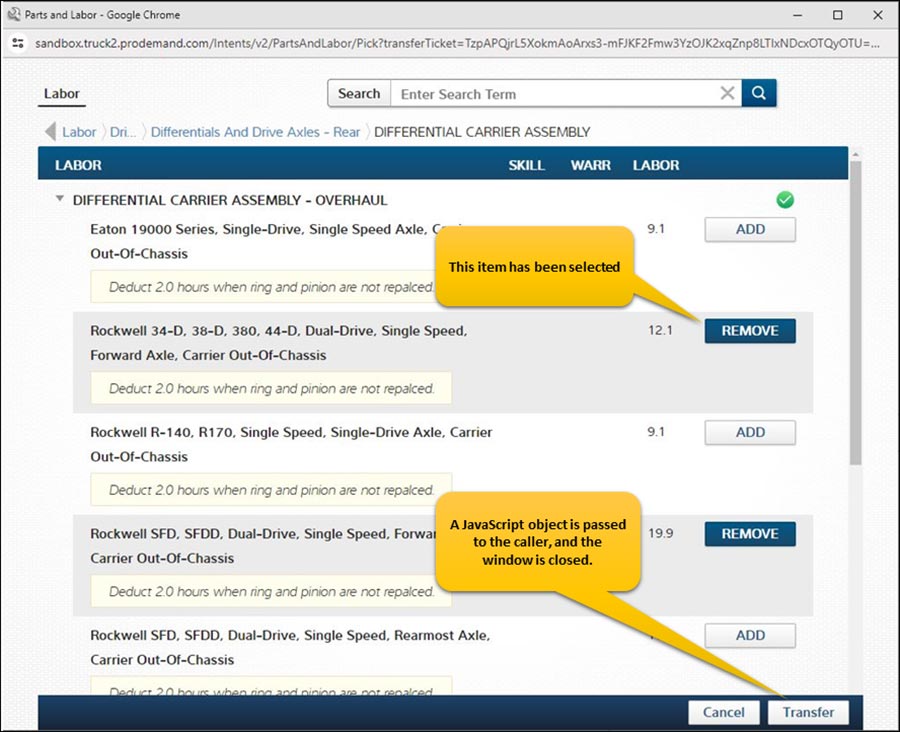
ProDemand Medium and Heavy-Duty Truck Class 4-8 has the following mechanisms for application-level integration with our repair content: (Labor)
Your users can launch the ProDemand Medium & Heavy-Duty Truck UI sub-sections, assuming they already have an active subscription. engineering physics by r.k. gaur and s.l. gupta pdf
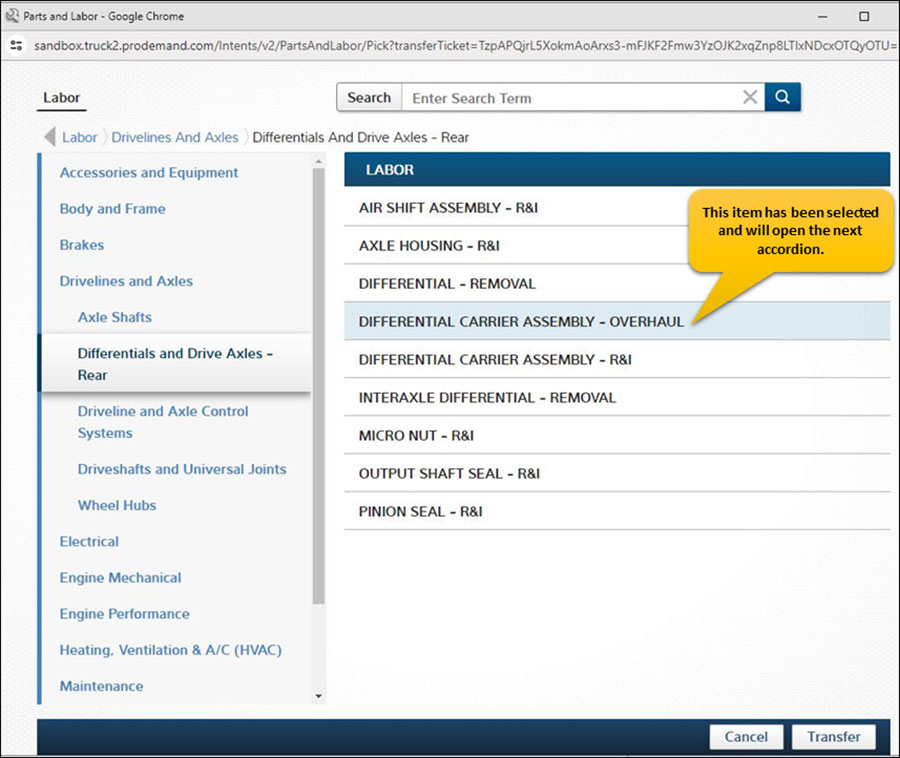
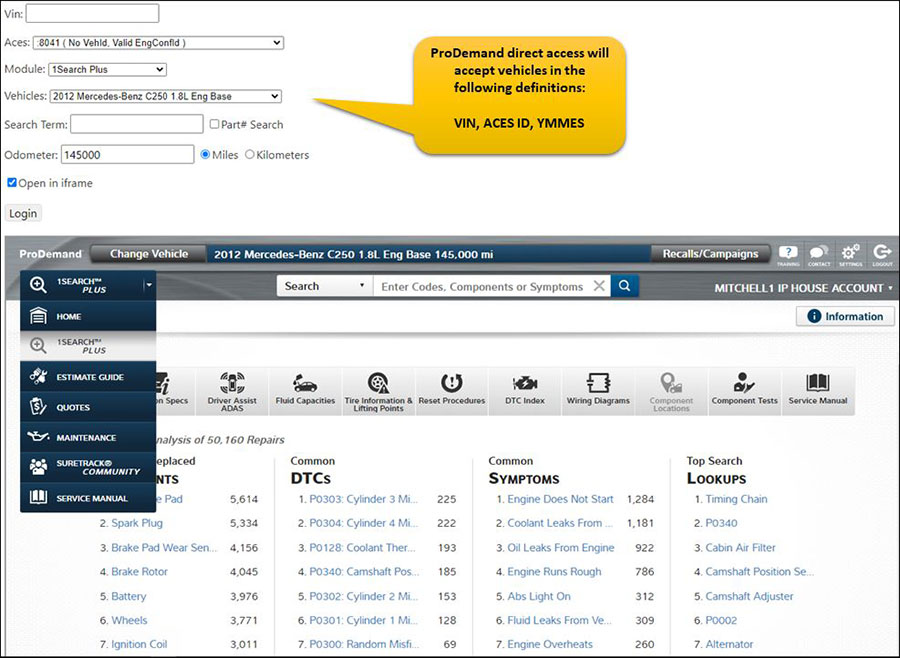
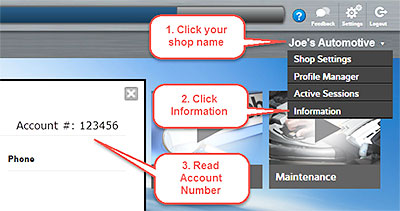
Direct Access—Pass-Through (transfer ticket) streamlines access straight into ProDemand. Depending on the configuration, this workflow uses the user/password credentials or an account number. Your users can launch into ProDemand, assuming they already have an active subscription.