


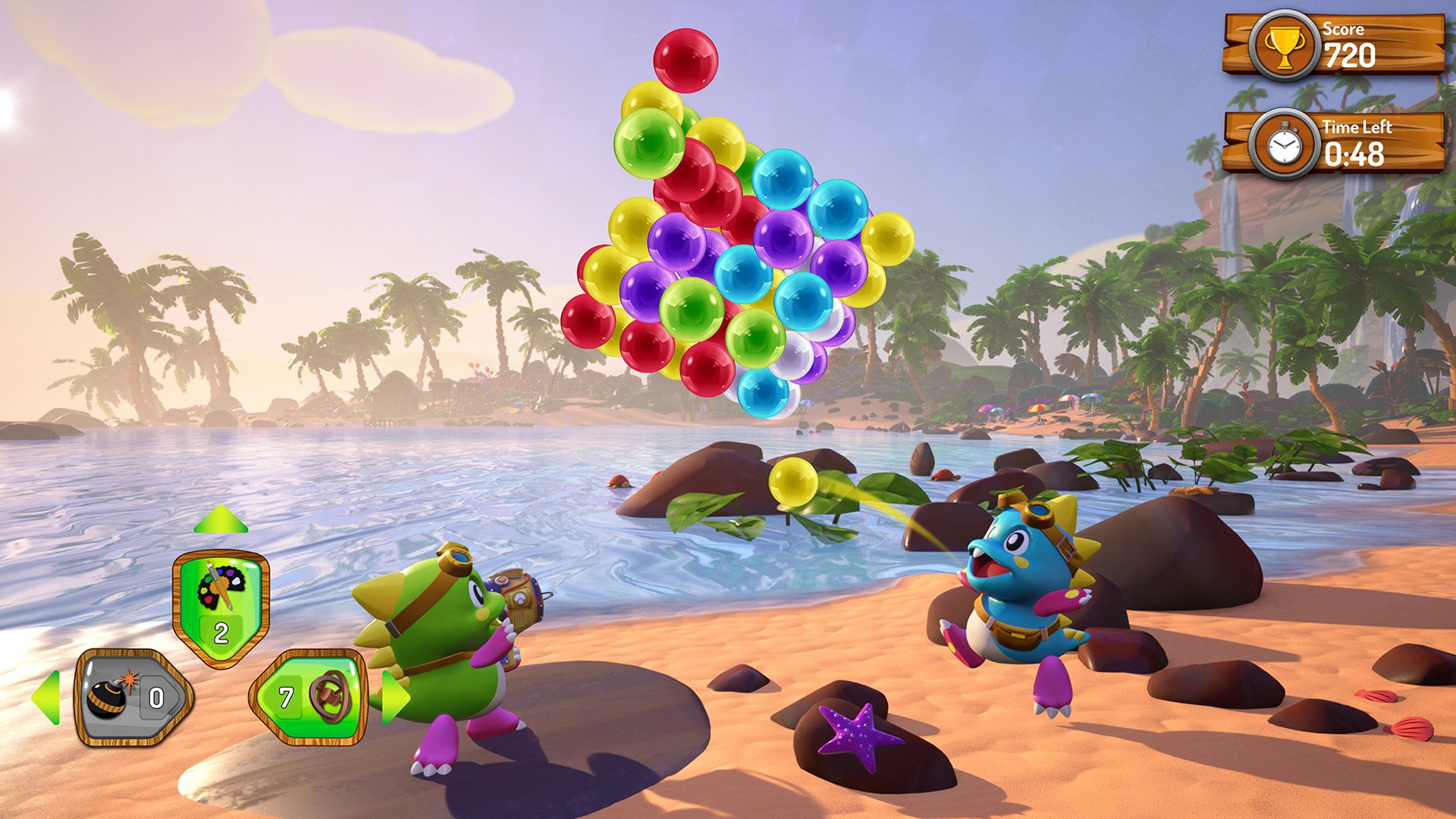
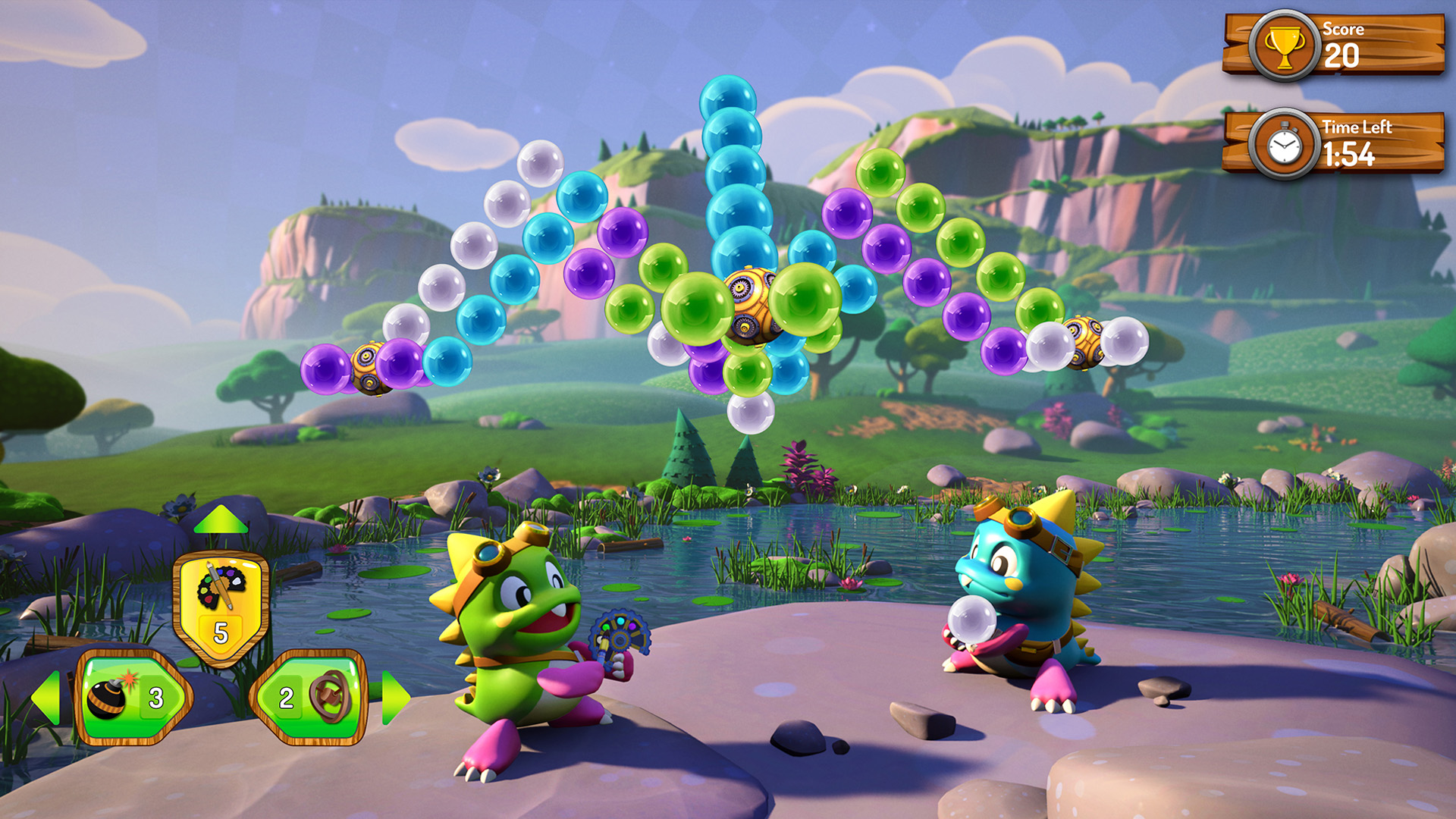
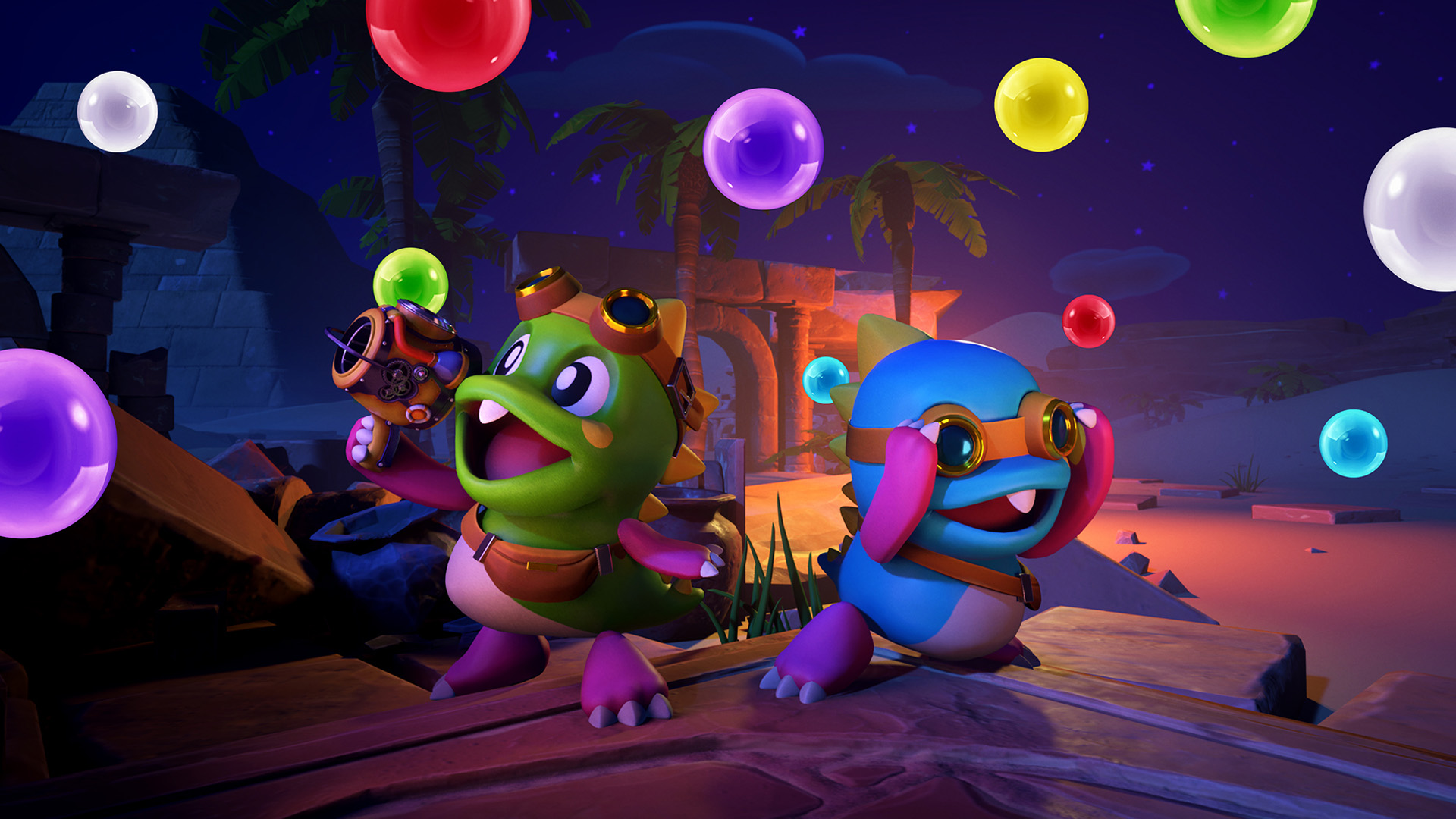
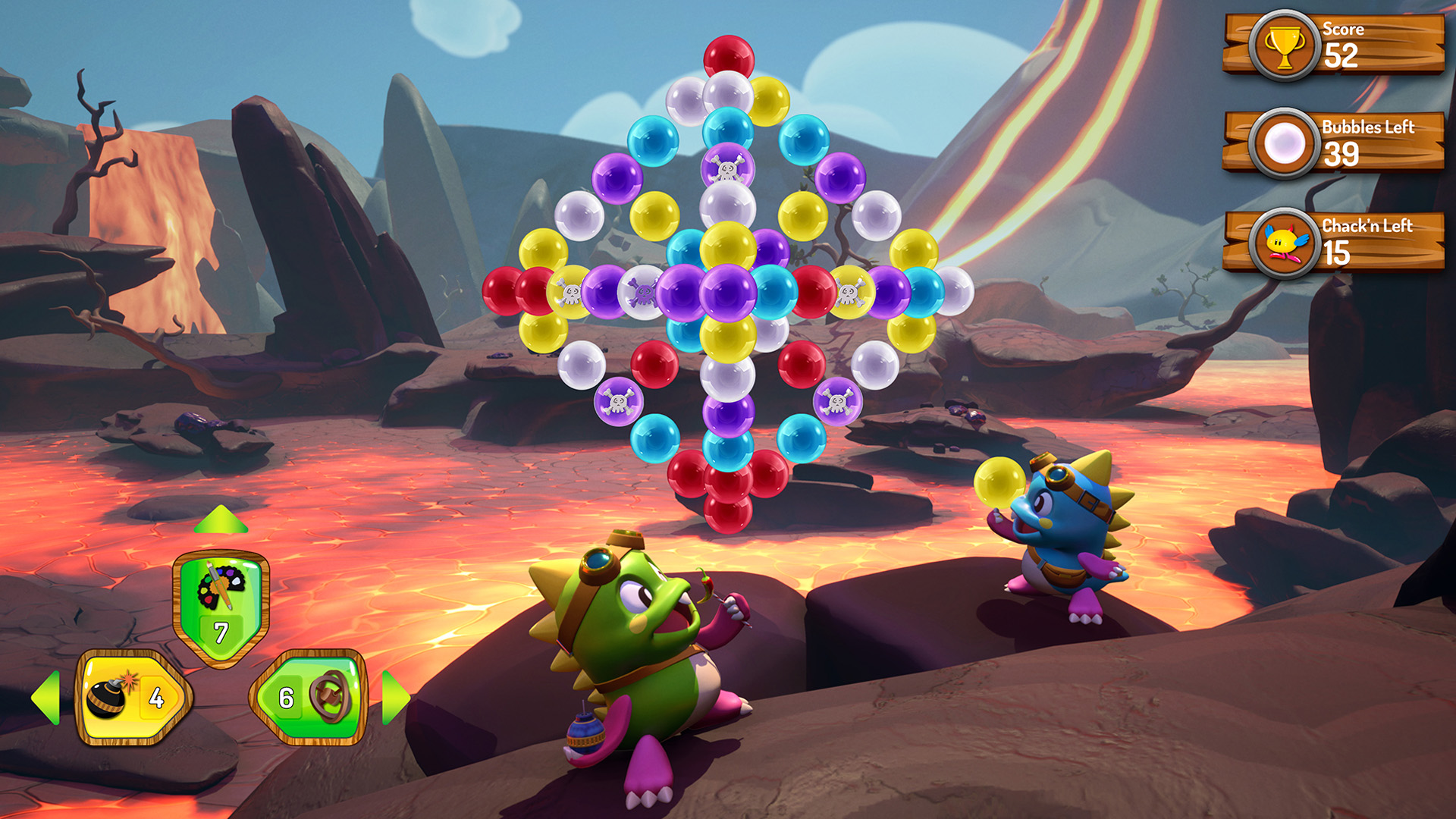
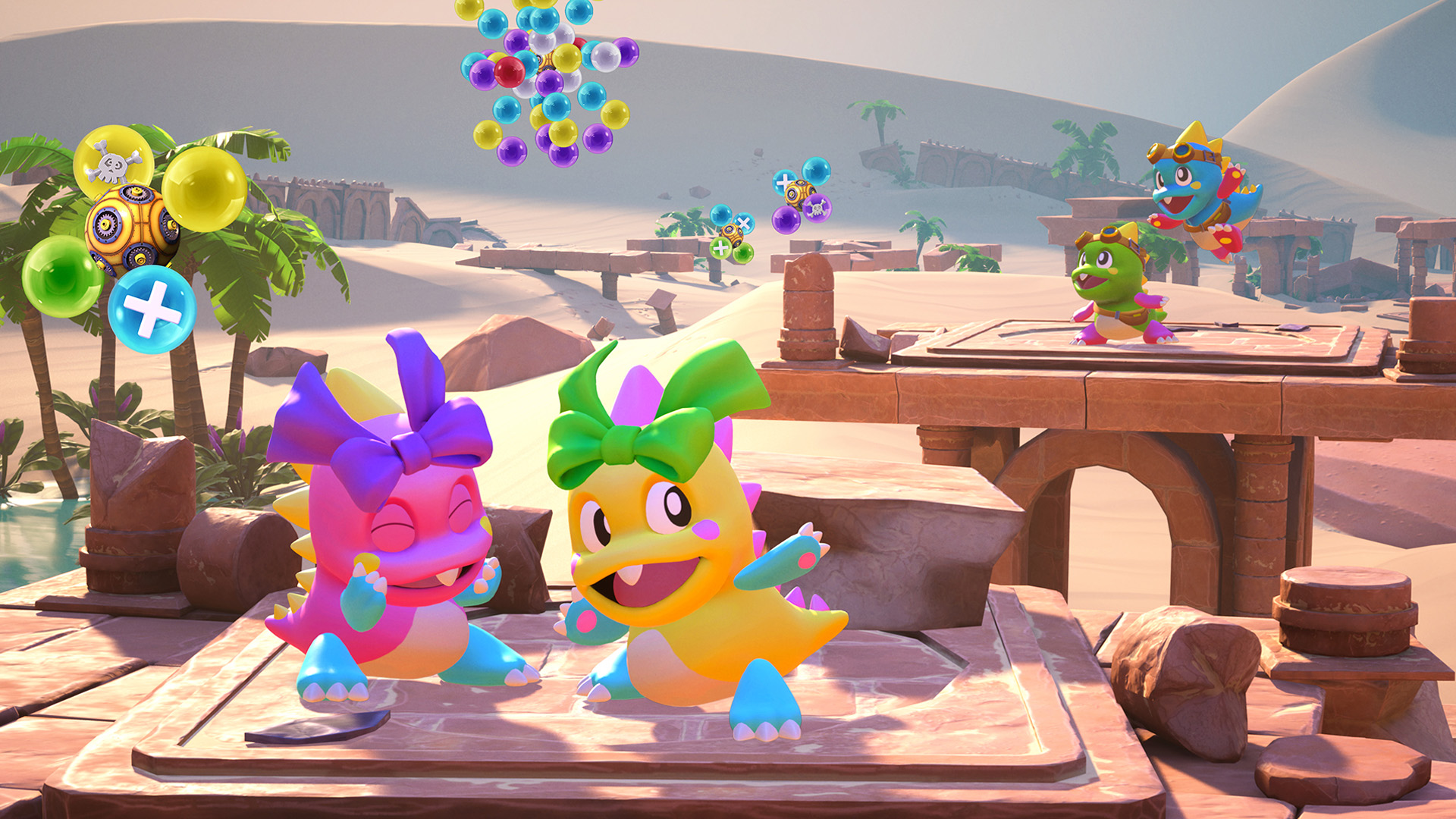
Bub and Bob are in for a surprise when their island vacation takes an unexpected turn for an epic, bubble-popping adventure! Explore lush tropical islands, peaceful lakesides and even the pyramids while solving 100 new puzzles in Puzzle Bobble's first-ever 3D and VR experience. Celebrating Bub's 35th anniversary, Puzzle Bobble returns with bubble-popping gameplay and characters you love, including an all-new score by Zuntata, the composers for the original series!
Bursting with the same cheerful energy, adorable characters, and timeless gameplay as its predecessors, Puzzle Bobble 3D: Vacation Odyssey is the next evolution of the classic Japanese action puzzle game franchise—with the immersive fun of 3D!

Marking Bub's 35th anniversary, Puzzle Bobble returns with bubble-popping gameplay and characters you love, including an all-new score by Zuntata, the composers for the original series!

Cross-Reality: Play Your Way On

Puzzle Bobble 3D brings a whole new dimension to the beloved action puzzle game franchise for a brain-teasing experience that's a blast for newcomers and die-hard fans alike! Featuring:








: Parx Racing, Hawthorne, Horseshoe Indianapolis, and Los Alamitos.
To successfully use these records, bettors should look for patterns in a horse's performance: retrospectos carreras americanas macaco hipico new
A diferencia de otros países, las carreras americanas se miden estrictamente por fracciones (22 segundos para el primer cuarto de milla, 45 para la media milla, etc.). El "Speed Figure" (usualmente el formato de Beyer Speed Figures ) es un número de tres dígitos que nivela la pista: un 90 en una pista rápida de Gulfstream equivale al mismo esfuerzo que un 90 en una pista pesada de Aqueduct. Compara siempre los picos de velocidad recientes de los ejemplares en la misma distancia. 2. El Factor Conexiones: Jinete y Entrenador : Parx Racing, Hawthorne, Horseshoe Indianapolis, and Los
Guía Completa de Retrospectos para Carreras Americanas: Cómo Usar las Herramientas de Macaco Hípico Compara siempre los picos de velocidad recientes de
Historically, the Spanish term “macaco” (monkey) was used colloquially in Latin American and Iberian racing circles to refer to jockeys with exceptional balance, climbing ability on the stirrups, and an almost primate-like agility in tight packs. In the United States, this style became emblematic of smaller, lighter riders from Central and South America who began dominating circuits in California, Florida, and New York from the 1980s onward.
Centraliza revistas hípicas y retrospectos sin costo directo mediante enlaces limpios y carpetas compartidas en la nube.


